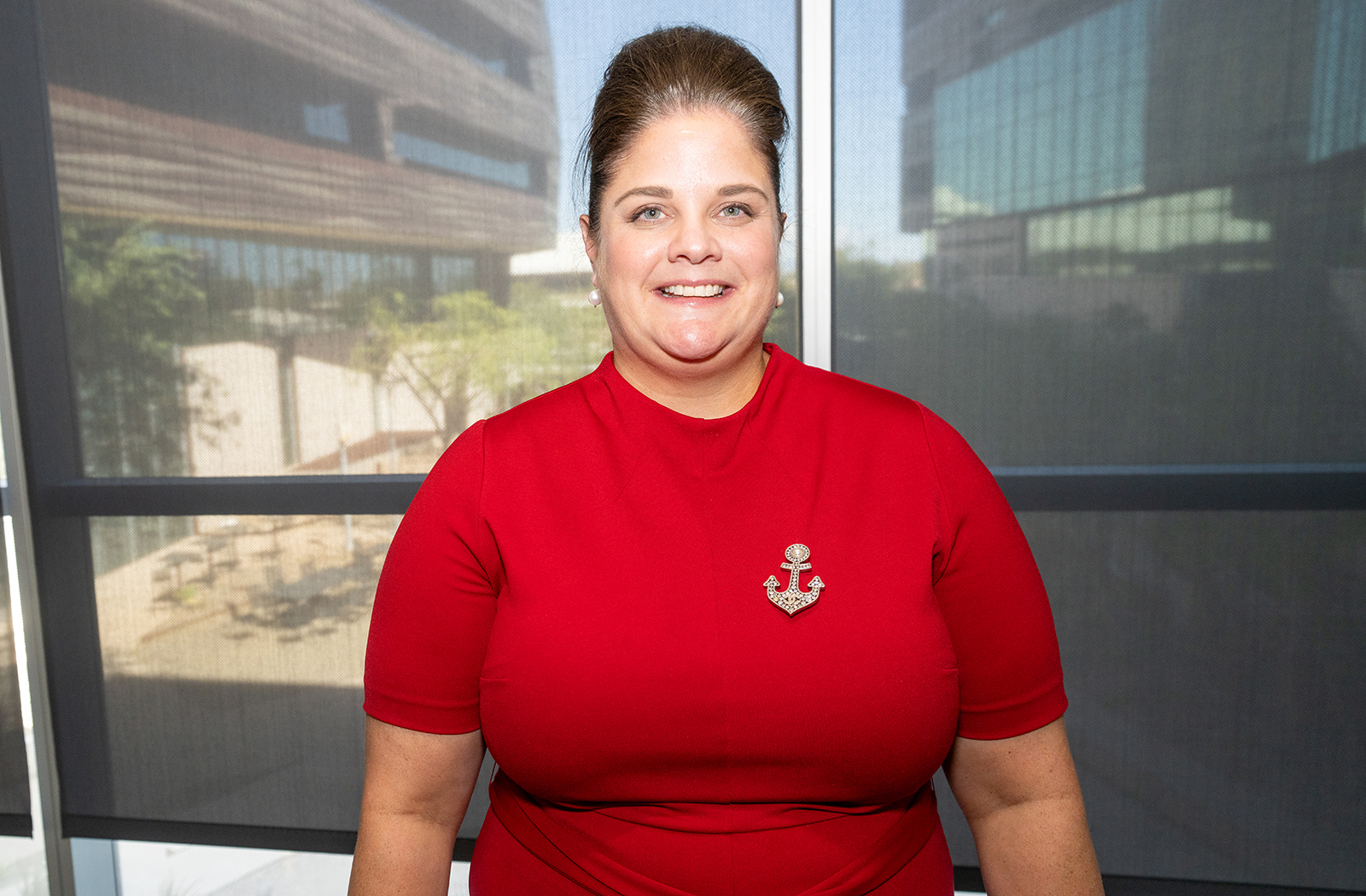
Women in Medicine and Science – Kirsten Brown, PhD, MA
Kirsten Brown, PhD, MA, serves as the associate dean of Educational Affairs within the Office of Undergraduate Medical Education at the University of Arizona College of Medicine – Phoenix.
As a medical education researcher, Dr. Brown’s project collaborations mainly focus on teaching and learning in the anatomical sciences, faculty development and artificial intelligence (AI).
Dr. Brown is an academic who wears multiple hats, but to her, the most pressing topic of her various fields is determining how to best use the plethora of tools available for teaching.
One of those tools is AI. Throughout her career, she has made it a mission of hers to educate others via peer-led seminars on proper and effective usages for AI — even creating a monthly series where colleagues shared their experience and best practices for AI usage.
“In my faculty development work, I’m interested in how technology can be integrated into our programming needs,” Dr. Brown said. “For example, how can we use AI to develop better assessments, teaching tools and streamline different processes?”
For students, she created a fourth-year elective that focused on responsible use, ethical issues and recognizing limitations in tools for academic workflows.
With regards to the future of AI, Dr. Brown senses that technology should not replace the core roles of academics. Rather, these tools will be integrated into the roles to make tasks more efficient.
“At the end of the day, we are responsible for our work, no matter what AI tools report,” Dr. Brown said. “What has happened with gross anatomy is integration of technology, and that’s where we will be with AI as well.”
In her new role, Dr. Brown hopes to inspire the next generation of physicians and researchers to recognize the importance that targeted, evidence-based teaching has in training our future workforce.
Outside of these AI-focused topics, Dr. Brown remains incredibly passionate and dedicated to teaching improvement, especially for faculty with limited academic commitments and no formal training.
“We found that these faculty not only recognized the need for teaching development, but participation increased confidence in teaching and resulted in a shift of how they viewed themselves as teachers,” Dr. Brown said. “What I take away most from this is that we can support everyone to be better teachers with targeted programming and considering the needs of our faculty.”
This extends to her work collaborating with fellow women in medicine. Dr. Brown emphasized its importance because of the shared common challenges in their respective careers. Having a space to share that is unique.
Previously, she created the Women in Anatomy Interest Group through the American Association for Anatomy as a way for female collaborators to connect, share ideas and convene informal meetings. She also served as chair of the Women in Medicine and Sciences group at the George Washington University School of Medicine and Health Sciences.
“One of my greatest accomplishments was creating our annual Mentor Awards to recognize colleagues who are exceptional mentors for female students, trainees and faculty,” Dr. Brown said. “Mentoring is immensely important, but it is sometimes invisible work, and, in many cases, women may carry a disproportionate burden of this work.”
Additionally, she hopes aspiring and current physicians will realize they are allowed to pivot. And high school and pre-medical students looking to enter her field should be encouraged to remain flexible, be open to new opportunities and find communities beyond academic medicine.
“This may be through religious organizations, alumni networks or community groups. My biggest support, besides my family, has been through my fraternal organization Delta Gamma,” Dr. Brown said. “I appreciate talking to people outside my job because they provide different perspectives from my immediate colleagues that keeps me grounded.”
About the College
Founded in 2007, the University of Arizona College of Medicine – Phoenix inspires and trains exemplary physicians, scientists and leaders to advance its core missions in education, research, clinical care and service to communities across Arizona. The college’s strength lies in our collaborations and partnerships with clinical affiliates, community organizations and industry sponsors. With our primary affiliate, Banner Health, we are recognized as the premier academic medical center in Phoenix. As an anchor institution of the Phoenix Bioscience Core, the college is home to signature research programs in neurosciences, cardiopulmonary diseases, immunology, informatics and metabolism. These focus areas uniquely position us to drive biomedical research and bolster economic development in the region.
As an urban institution with strong roots in rural and tribal health, the college has graduated more than 1,000 physicians and matriculates 130 students each year. Greater than 60% of matriculating students are from Arizona and many continue training at our GME sponsored residency programs, ultimately pursuing local academic and community-based opportunities. While our traditional four-year program continues to thrive, we will launch our recently approved accelerated three-year medical student curriculum with exclusive focus on primary care. This program is designed to further enhance workforce retention needs across Arizona.
The college has embarked on our strategic plan for 2025 to 2030. Learn more.