
Match Day Profile: Erika Yasuda

Every third Friday in March, fourth-year medical students across the United States learn where the next chapter in their careers will be written. Match Day is the day when the National Resident Matching Program releases results to applicants in sealed envelopes, revealing where they will spend the next several years in residency, training in their chosen specialty. After years of preparation and study, it is a long-awaited and well-deserved day to celebrate. The University of Arizona College of Medicine – Phoenix is profiling several students for Match Day 2026.
Meet Erika Yasuda
After growing up in Sunnyvale, California, Erika Yasuda decided to explore a completely different climate, attending the University of Michigan in Ann Arbor to study kinesiology. At Michigan, she walked onto the women's rowing team as a coxswain and found herself spending the next four years as a student-athlete, dividing her time between the classroom and the water.

In between, Yasuda had the unique opportunity to enter operating rooms as part of an intraoperative neuromonitoring program, keeping watch over the integrity of patients' nervous systems in real time during orthopedic and neurosurgery cases. She then spent two gap years working in the field of intraoperative neuromonitoring, initially in Dallas and then in Los Angeles, before beginning her journey at the University of Arizona College of Medicine – Phoenix.
For Yasuda, her biggest supporters have always been her parents, grandparents, younger sister, childhood best friends and husband. Her parents and grandparents have always made her believe she could accomplish anything she set her mind to — including becoming a physician. And she refers to her younger sister as her "20-year-old therapist" because she has always helped Yasuda through moments of self-doubt.
Her best friends — Meg and Nick, who live in New York and California — have also made every effort to support her from the first day of medical school via FaceTime calls and visits. Lastly, Yasuda is immensely grateful for everything her husband has done to carry her through medical school. From cooking all the meals to cleaning the apartment to instilling confidence in her every single day, she would not be where she is today without him — or any of her other cheerleaders.
Path Toward Medicine
What was the spark that led you to become a physician?
My initial curiosity in medicine began after tearing my ACL at age 12 and was further confirmed after tearing my other ACL at age 16, both while playing basketball. I had no idea what my sports medicine physician was talking about when she told me I had torn my "ACL," except for the part where she said I would be sidelined for at least nine months. As a middle schooler, that was some of the most heartbreaking news I had received up to that point in my life. All I wanted was to be out on the court with my friends, so I dedicated myself to understanding the diagnosis, surgical options and post-operative management as thoroughly as I could. That curiosity only grew through my experience in intraoperative neuromonitoring and during a global health trip to Peru.
In Peru, one of the most unforgettable moments came while working with first-time expecting mothers — many of them young, some of them navigating incredibly difficult circumstances, often stemming from strict gender roles. Our team worked to empower them by bringing them together to build a supportive community and provide education on what to expect during the upcoming weeks of pregnancy, the importance of iron-rich foods and how to prepare for their baby's arrival. Watching those women leave our sessions with a little more confidence and a little less fear reminded me why accessible, compassionate care matters so deeply. This experience also solidified my belief that humanistic medicine can change the trajectory of someone's life.
Choosing a Specialty
Do you have a specialty? What is it and why did it interest you, or what led you to it?
I applied to family medicine after going through my third- and fourth-year rotations and finding myself genuinely drawn to every specialty I rotated through, from pediatrics to plastic surgery. However, the important role that longitudinal relationships play in promoting longevity kept returning to my mind as I reflected on where I could make the most meaningful impact.
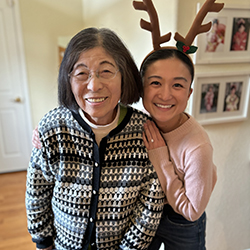
My 90-year-old grandmother does not speak English and has spent her life navigating the health care system across a significant language barrier. She attributes much of her longevity to the trusting relationship she has built with her family medicine physician, one who takes the time to understand her values and delivers care that truly honors them. Growing up watching her struggle to be heard, and then witnessing the difference a single, consistent physician made in her life, planted a seed in me long before I ever stepped into a hospital.
Family medicine physicians are often described as caring for patients from "womb to tomb," and that scope is exactly what draws me in. What I kept wishing for during my rotations was simply more time with each patient — more opportunity to understand what drives them, what they value and how I could best support not just their health, but their broader goals. I am also fluent in Japanese, and I hope to help others in a similar situation as my grandmother, with limited English fluency, feel genuinely empowered and understood while receiving care. Family medicine is where I feel most at home, and where I know I can show up for patients not just once, but repeatedly across the full arc of their lives.
What’s Next
Post-Match Day, what are your goals moving forward?
After Match Day, I plan on soaking up time with my family and close friends. I am looking forward to a relaxing vacation in Maui and a trip to visit my grandma, aunts, uncles and cousins in Japan. In case residency takes me somewhere new, I also plan to squeeze in as much time as possible with the community I have built here in Phoenix. I have a few tea ceremonies coming up that I am helping with at the Japanese Friendship Garden, and I will be going to as many indoor cycling classes as I can with my favorite instructors here.
Once I start residency, my goals are to embrace new challenges with curiosity, deepen my clinical skills and build genuine community with my patients, co-residents and faculty. I anticipate that residency will push me in ways I have never been pushed before, and I hope to combat any fear with excitement for the personal and professional growth that is to come.
The College of Medicine – Phoenix Culture
What will you miss most about the College of Medicine – Phoenix? Any advice for incoming medical students?
I will truly miss the people at the College of Medicine – Phoenix the most. I have gained such incredible friendships that have only grown stronger throughout medical school, to the point of having classmates at my wedding all the way on Oahu! I am also deeply grateful to have worked with mentors who are genuinely invested in helping me succeed. There is something so unifying about enduring this journey together, and I am so appreciative of the lifelong relationships I have built along the way.
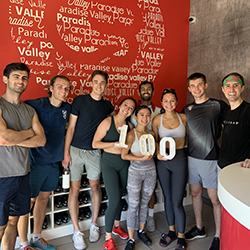
My advice to incoming medical students: celebrate every accomplishment, no matter how big or small. Whether it is treating yourself to your favorite dessert after an exam or traveling somewhere new after Step 1, it is so important to recognize every step you take forward. It can be easy to ruminate in self-doubt after a difficult test or not knowing the answers to questions asked by an attending, but those moments make it even more important to validate yourself along the way.
Above all else, remind yourself daily that you are more than a medical student. Do something every day that allows you to feel like the person you were before medical school. It can be a hobby — like playing an instrument, cooking or your favorite form of movement. Whatever it is, schedule that time in, and you will be so much better for it. I plan on implementing my own advice as I start my next chapter as an intern!
About the College
Founded in 2007, the University of Arizona College of Medicine – Phoenix inspires and trains exemplary physicians, scientists and leaders to advance its core missions in education, research, clinical care and service to communities across Arizona. The college’s strength lies in our collaborations and partnerships with clinical affiliates, community organizations and industry sponsors. With our primary affiliate, Banner Health, we are recognized as the premier academic medical center in Phoenix. As an anchor institution of the Phoenix Bioscience Core, the college is home to signature research programs in neurosciences, cardiopulmonary diseases, immunology, informatics and metabolism. These focus areas uniquely position us to drive biomedical research and bolster economic development in the region.
As an urban institution with strong roots in rural and tribal health, the college has graduated more than 1,000 physicians and matriculates 130 students each year. Greater than 60% of matriculating students are from Arizona and many continue training at our GME sponsored residency programs, ultimately pursuing local academic and community-based opportunities. While our traditional four-year program continues to thrive, we will launch our recently approved accelerated three-year medical student curriculum with exclusive focus on primary care. This program is designed to further enhance workforce retention needs across Arizona.
The college has embarked on our strategic plan for 2025 to 2030. Learn more.