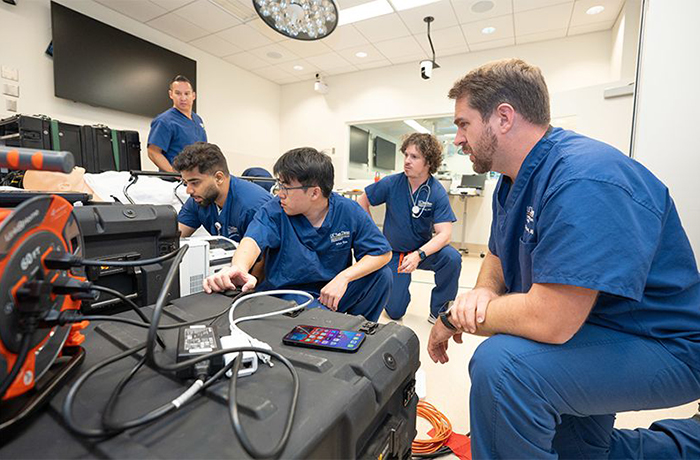
Alumni Spotlight – Jeffrey Tully, MD

Since the University of Arizona College of Medicine – Phoenix was founded in 2007, it has graduated more than 1,100 physicians who have built exemplary careers in clinical care, research discovery and academic medicine. Many college alumni remain in Arizona to complete their residency training and build their careers in health care, while others branch out across the country to pursue their Graduate Medical Education (GME) training and subsequent careers in esteemed specialties.
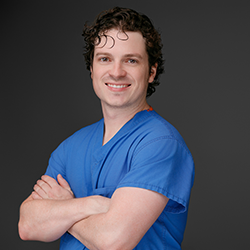
Jeffrey Tully, MD — an alumnus of the College of Medicine – Phoenix’s class of 2014 — has not slowed down since earning his MD and continues to impress the college and academic medicine communities.
Dr. Tully completed his first residency in pediatrics at Phoenix Children’s and then undertook additional residency training in anesthesiology at University of California (UC) Davis. Since his GME training, Dr. Tully has widened his expertise by becoming an international leader in the field of health care cybersecurity — currently serving as the co-director of the UC San Diego Center for Healthcare Cybsercurity.
And his illustrious career in medicine is just getting started.
Dr. Tully has been named the inaugural chair holder of the Sheldon Furst Endowed Chair in Anesthesiology at UC San Diego.
He took some time out of his busy schedule to tell us all about his path from the U of A College of Medicine – Phoenix to being named an endowed chair.
Catching Up with Dr. Tully
What was your first reaction when you learned you had been selected as an inaugural endowed chair, and what does this appointment mean to you personally and professionally?
The first reaction was shock, followed by a very profound sense of gratitude and more than a little whiff of impostor syndrome.
For those who are not familiar with academic terminology — my mom thought I was getting a literal piece of furniture — an endowed chair is one of the highest honors that a faculty member can receive. A substantial financial gift is made by a donor and resources from that gift — often in the form of interest — are provided to the faculty member to be used for research, teaching, service or other academic pursuit. Endowed chairs are often bestowed upon distinguished faculty well into their careers, as a marker of significant accomplishment or to recruit highly accomplished or in-demand faculty.
I am still (hopefully) in the beginning phases of my career, so this type of honor was never on my radar as being a possibility for an associate professor less than five years into my tenure. So from a personal standpoint, it is an incredible privilege and a very meaningful recognition from my department and my colleagues. Professionally, the pressure is now on to live up to the honor!
What makes the Sheldon Furst Endowed Chair in Anesthesiology unique?
At the risk of perpetuating a number of puns, the Furst Endowed Chair is the...first endowed chair that our department has received in its over half a century of existence, which is a very big deal. But what truly makes this gift unique is that our department chair — a different kind of chair, more like the big boss — Dr. Ruth Waterman had an idea for a different model for this endowed chair gift.
As opposed to using its resources as an accolade for a senior faculty member, she envisioned the gift as a term limited accelerant for early to mid-career faculty in our department to use as a catalyst for the promising work we have begun to undertake but have not yet matured. So, I will be the first steward of this gift, and in five years, I will hand it off to another awesome colleague; and over time, Dr. Furst's legacy will propagate across generations of emerging leaders in the UC San Diego Health Department of Anesthesiology.
What responsibilities are associated with being an endowed chair, and how does it differ from being a traditional faculty member?
As far as responsibilities, the resources are intended to help support any of my activities across clinical practice, research, innovation, education and service. Some faculty with endowed chairs use the money to reduce their clinical obligations in order to focus on research, others to fund students in their labs, others to take new coursework or travel to conferences.
Once I pick my jaw up off the floor, I'll be putting together a roadmap for how I’ll fully leverage this opportunity over the next five years. However, we did start by sponsoring an evening for our awesome anesthesia and surgery residents to get to know each other at the start of a new academic year over drinks and pizza, and I think that'll be something we continue on a quarterly basis.
In what ways does having an endowed chair strengthen an academic medical center? How will it advance your research, how will it create opportunities for your colleagues and students, and how will it advance patient care?
Endowed chairs are really a way to translate a personal legacy into impact at scale by making a long term investment into what academic medical centers do best — research, education and patient care.
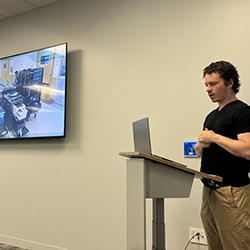
For me, this gift allows me to focus additional time and energy into the work I've done in the health care cybersecurity space, establishing UCSD as a leader in the effort to protect patients and hospitals from technology failures like ransomware attacks or data breaches.
These types of gifts also create a momentum of their own, bringing additional prestige and renown to the department and institution, and hopefully inspiring others to get involved in a similar way. Over time, endowed chairs can help lead to incredible breakthroughs and advances that benefit all of society.
What would you say to someone considering investing in academic medicine through philanthropy?
Particularly with this endowed chair and the way that Dr. Waterman has chosen to implement this gift, I think of it like the academic equivalent of a seed round investment for a researcher, department or institution. This type of gift can make such a profound impact at a pivotal time in a researcher's career and really force multiply the impact they can have if their work is successful. I hope that Dr. Furst will look back with pride, not just on the development of my career but all the subsequent holders of the chair and will know that he has a personal stake in all of the forthcoming accomplishments.
Reflecting back on your time at the University of Arizona College of Medicine – Phoenix, did you imagine being named an endowed chair?
I certainly did not and if any of my former professors tell you they imagined that for me, then they are filthy liars.
How did your education at the College of Medicine – Phoenix lead you to academic medicine?
I was very fortunate to have somehow tricked a bunch of awesome medical schools into offering me admission. I decided to go to the College of Medicine – Phoenix because it was — at the time — the new kid on the block. As the class of 2014, we were only the fourth cohort to go through the program, and it just felt like there was so much opportunity to shape the experience and culture for ourselves in ways that might not be possible at more storied institutions with legacies, reputations and whatnot.
I didn't know it at the time, but what we were all doing collectively as students, faculty and administrators was innovating — a word which has been thoroughly abused and watered down on LinkedIn and corporate conferences — but in its truest sense is the best part of academic medicine and academics writ large.
At the College of Medicine – Phoenix, we didn't know what we couldn't do — start new electives, set up shop in new buildings and invite new speakers — such that that we ended up doing a lot of really cool and novel things. I took that mindset with me when moving on to residency and faculty life, and the "you can just do things" mentality has served me very well to date.
Are there past experiences that helped prepare you for this appointment?
I firmly believe in failing upward. For every success I've experienced, I've had somewhere between 10 and 100 rejections or failures preceding it. I believe in the ‘take the at-bat' approach to things. The more opportunities you shoot for, the more you fail but also the more you succeed.
Were there College of Medicine - Phoenix faculty mentors who influenced your career goals?
The list of faculty mentors from my College of Medicine – Phoenix days is too long to print. and I wouldn't want to risk hurting any feelings through inadvertent omission; so I will just say I hope they know who they are and that I continue to be grateful for every bit of assistance I've been given along the way from the people much wiser than me.
Even more important than faculty, though, are my contemporary colleagues who are mentors in their own way and I should call out two of them. As a senior student relative to me, Dr. Robert Bina was a role model from day one of medical school through today as the exemplar of what it means to be a humanist physician.
Additionally, I met my best friend Dr. Christian Dameff on the first day of medical school and 16 years later, I am profoundly grateful to call him my research and professional partner to this day. I would have never made it to this point without him and the whole team of researchers, students and staff that we now have the privilege of working with.
What advice would you give current and prospective medical students?
Current medical students: Focus of course first on becoming the best clinical and humanist physician you can be. Then realize that being a physician is an incredible privilege that opens up a whole host of amazing opportunities beyond the bedside, whether in education, research, entrepreneurship or policy — just to name a few — and then commit to exploring those opportunities as you progress throughout your career.
Prospective medical students: Don't fall for the fallacy that there is only one conventional path to get to medical school. Do your biology and o-chem and the rest of the prerequisite courses but then explore an educational or career path that is meaningful and self-actualizing for you, and you will naturally find your way to where you need to go. Don't be afraid to study computer science or Chinese or poetry if that's what makes you happy. Don't be afraid to spend a few years after college working in industry or building a startup. All of the experiences you have will contribute to your unique perspective and story.
Looking forward, what are you most excited to accomplish in your new role?
I have lots of projects and goals I am looking forward to tackling, but I am most excited about the opportunity to hand off this stewardship of Dr. Furst's legacy in five years to one of my amazing colleagues in the Department of Anesthesiology at the UC San Diego School of Medicine, and get to sit back and watch as they do even more amazing things.
About the College
Founded in 2007, the University of Arizona College of Medicine – Phoenix inspires and trains exemplary physicians, scientists and leaders to advance its core missions in education, research, clinical care and service to communities across Arizona. The college’s strength lies in our collaborations and partnerships with clinical affiliates, community organizations and industry sponsors. With our primary affiliate, Banner Health, we are recognized as the premier academic medical center in Phoenix. As an anchor institution of the Phoenix Bioscience Core, the college is home to signature research programs in neurosciences, cardiopulmonary diseases, immunology, informatics and metabolism. These focus areas uniquely position us to drive biomedical research and bolster economic development in the region.
As an urban institution with strong roots in rural and tribal health, the college has graduated more than 1,000 physicians and matriculates 130 students each year. Greater than 60% of matriculating students are from Arizona and many continue training at our GME sponsored residency programs, ultimately pursuing local academic and community-based opportunities. While our traditional four-year program continues to thrive, we will launch our recently approved accelerated three-year medical student curriculum with exclusive focus on primary care. This program is designed to further enhance workforce retention needs across Arizona.
The college has embarked on our strategic plan for 2025 to 2030. Learn more.