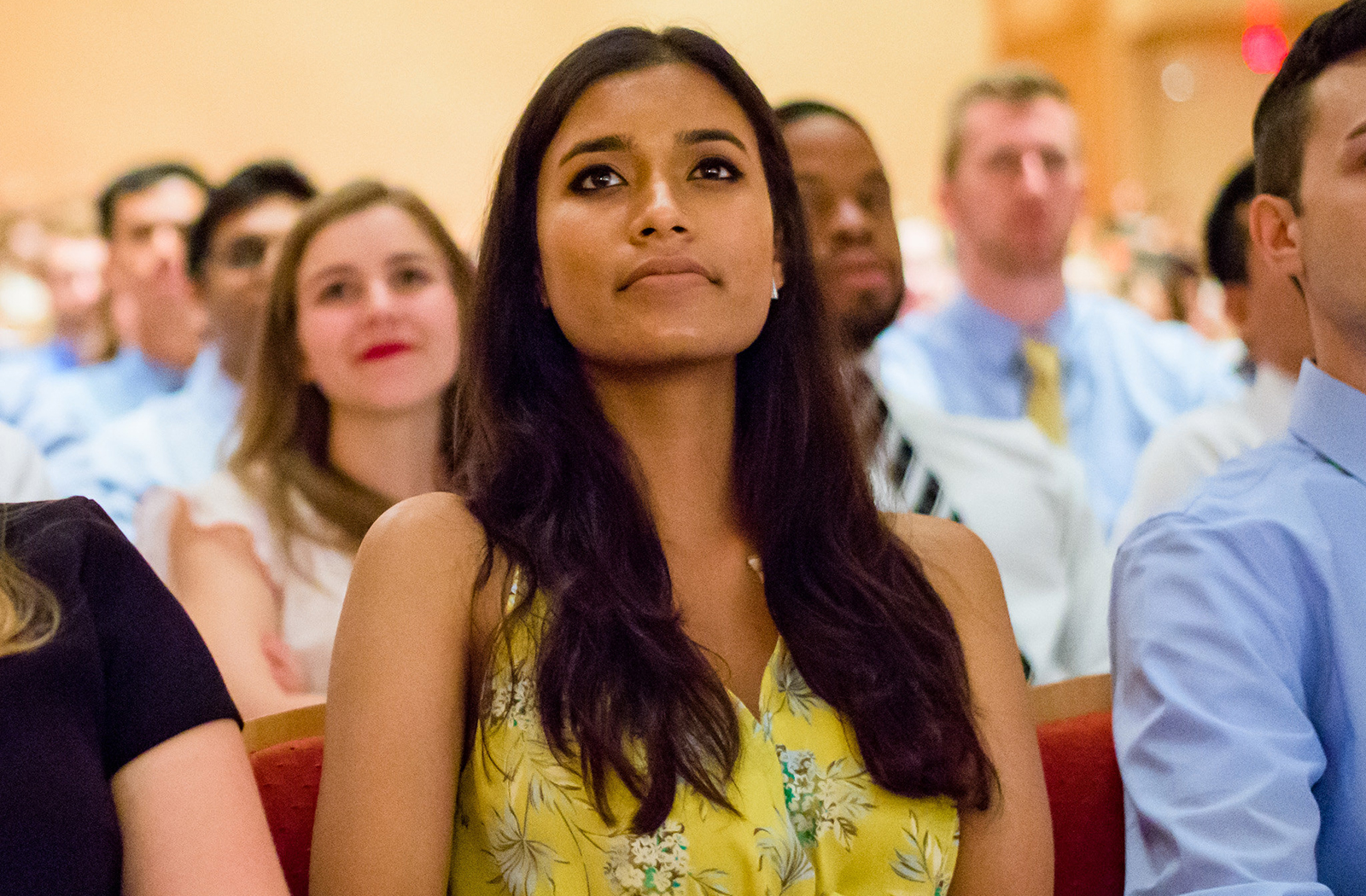
Convocation Profile: Vedanshi Bhargava

On Monday, May 11, the University of Arizona College of Medicine – Phoenix will hold its 16th Convocation. Led by a pipe and drum corps, the Class of 2026 will process through downtown Phoenix, finishing at the Phoenix Convention Center for their official ceremony. The day marks the beginning of the next phase in their journey as physicians. The college profiled a series of graduating students to commemorate the milestone.
Meet Vedanshi Bhargava
Vedanshi Bhargava is from Chandler, Arizona. Growing up, she was fascinated by medicine, and she knew at a very young that she wanted to be a doctor.
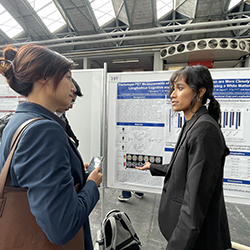
A graduate of the University of Arizona in Tucson, she majored in Neuroscience and Cognitive Sciences. Through her undergraduate studies, Bhargava had some incredible neuroscience professors who challenged her intellectually and made her feel like her voice in science mattered.
Because of that, she was determined to have training time reserved during medical school to build her skills in research. That, ultimately, influenced her decision to apply to the MD/PhD track at the U of A College of Medicine – Phoenix.
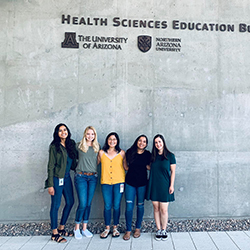
During the course of her rigorous dual degree studies, Bhargava credits her family and friends as being her biggest supporters, and she is so grateful for them.
Path Toward Medicine
What was the spark that led you to become a physician?
As cliché as it sounds, I’ve always wanted to have a career where I have the privilege of helping people every day. I followed this intuition in high school and volunteered in the Dignity Health St Joseph’s Hospital cafeteria. While volunteering, I would watch doctors in their white coats, listen to their conversations and I remember feeling like this must be the coolest job. After college, I returned to the same hospital as a scribe and then later returned as an MD/PhD student during my clinical rotations. We’ve come a long way!
What’s Next?
What are your plans post-graduation and what excites you most for your future career in medicine?
I will be pursuing a career in biotechnology post-graduation. I am excited to combine my training in both research and medicine to address unmet needs in health care and help bring innovation directly to patients. To me, this feels like the epitome of MD/PhD training, taking science and medicine and using them together to make a real difference.
My hope is that MD and MD/PhD programs begin to incorporate training that expands the physician’s role beyond its traditional path. We work directly with the health care system and see unmet needs every day, yet are not always equipped with the tools to develop solutions. I want future doctors to be trained in intellectual property, the biodesign process and the fundamentals of building a company. Physicians need to be at the table when solutions are being built, and I believe incorporating these skills early into our training will truly improve patient care.
The College of Medicine – Phoenix Culture
Looking back, what’s your favorite medical school memory?
The full-circle moments stand out the most. As part of my PhD, I worked on understanding blood-based biomarkers in Alzheimer’s disease and later interned at Cala Health, a startup company where I studied the mechanism of action of a peripheral neuromodulator for essential tremor patients.
When I returned to medical school, on my outpatient neurology rotation, I watched clinicians use those same blood-based biomarkers to help diagnose Alzheimer’s disease and saw patients with essential tremor being fitted for the Cala Health peripheral neuromodulator I had studied. Seeing research I touched show up in patient care has been truly rewarding and one of my favorite parts of this journey.
Earning a Dual Degree
How do you think earning an MD/PhD will benefit you most in your career as a physician? And what were some of the challenges of taking on that dual degree?
You’re put through a very unique set of challenges as an MD/PhD student. I remember returning to medical school after graduate school and thinking how surreal it was to be delivering a placenta after I had been writing code in graduate school just a month before. You sign up for a 7–8-year program, where it is up to you, with little guidance, to get up every day and tackle whatever challenge lies ahead — whether that's relearning medical knowledge you inevitably forgot during graduate school or pushing through a manuscript that keeps getting rejected. Having a strong support system is also so important as you navigate what can often be a lonely journey.
This training has given me the ability to think like a physician while understanding the science that is actively being done to improve patient outcomes. I hope to pursue a career in biotechnology, bridging early-stage science with innovation and patient care.
About the College
Founded in 2007, the University of Arizona College of Medicine – Phoenix inspires and trains exemplary physicians, scientists and leaders to advance its core missions in education, research, clinical care and service to communities across Arizona. The college’s strength lies in our collaborations and partnerships with clinical affiliates, community organizations and industry sponsors. With our primary affiliate, Banner Health, we are recognized as the premier academic medical center in Phoenix. As an anchor institution of the Phoenix Bioscience Core, the college is home to signature research programs in neurosciences, cardiopulmonary diseases, immunology, informatics and metabolism. These focus areas uniquely position us to drive biomedical research and bolster economic development in the region.
As an urban institution with strong roots in rural and tribal health, the college has graduated more than 1,000 physicians and matriculates 130 students each year. Greater than 60% of matriculating students are from Arizona and many continue training at our GME sponsored residency programs, ultimately pursuing local academic and community-based opportunities. While our traditional four-year program continues to thrive, we will launch our recently approved accelerated three-year medical student curriculum with exclusive focus on primary care. This program is designed to further enhance workforce retention needs across Arizona.
The college has embarked on our strategic plan for 2025 to 2030. Learn more.