College Publishes Academic Journal

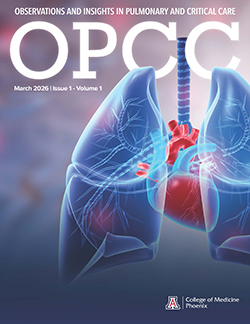
The Office of Academic and Faculty Affairs, in collaboration with the Department of Internal Medicine, has officially launched Observations and Insights in Pulmonary and Critical Care (OPCC), a peer-reviewed, open-access journal dedicated to advancing knowledge to a broad pulmonary, critical care, cardiovascular, thoracic, sleep, ENT and inpatient medicine audience.
Formerly the Southwest Journal of Pulmonary, Critical Care, and Sleep Medicine, OPCC seeks to carry forward the mission and spirit of its predecessor, while broadening the scope and content and emphasizing trainee success.
Committed to the Rapid Publication of Clinically Meaningful Content
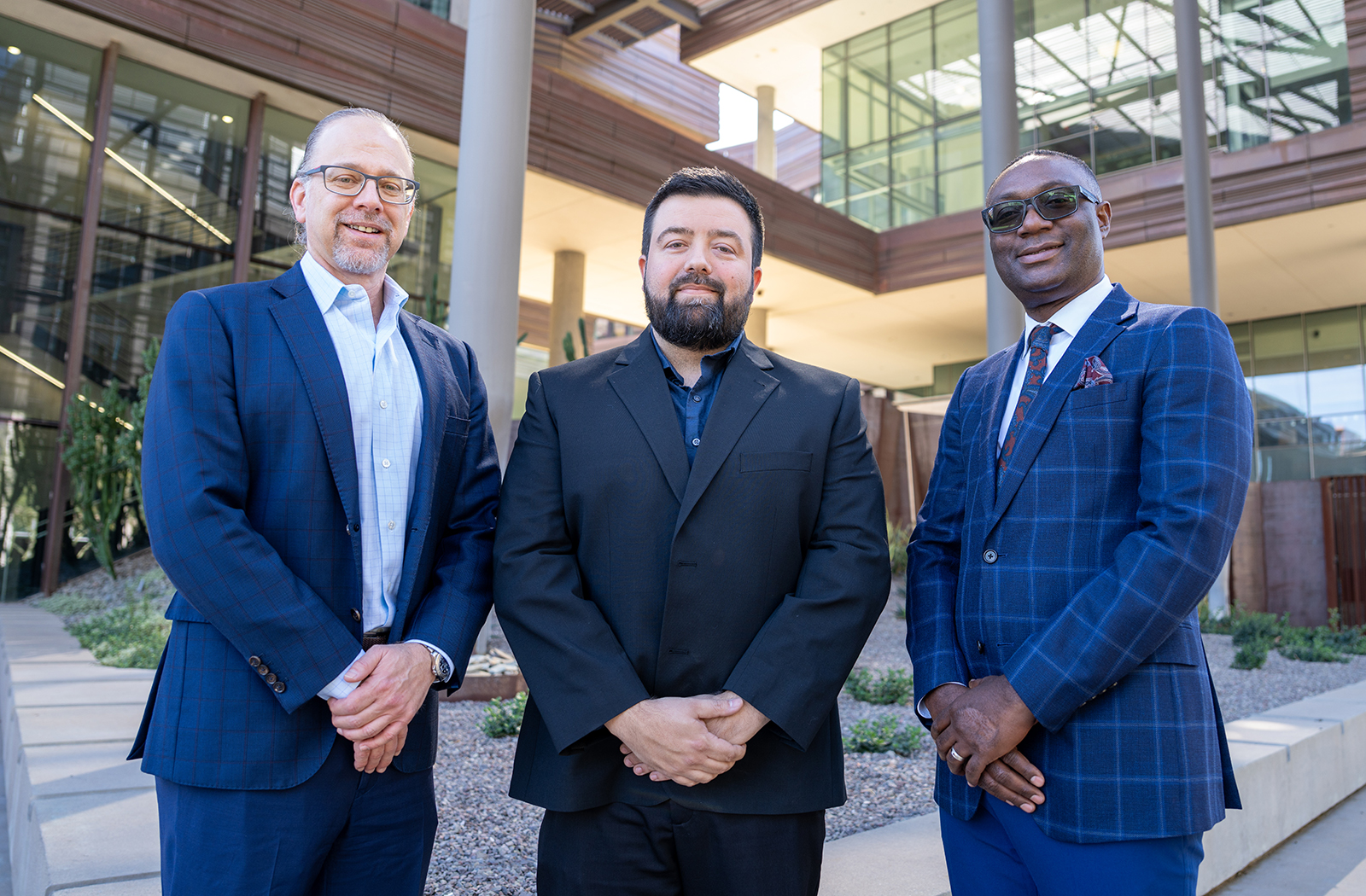
“The pandemic taught us that important clinical observations need to be published quickly and rigorously. Additionally, the field of pulmonary, critical care and sleep medicine is constantly changing, requiring rapid study and evolving models of care,” said Ken Knox, MD, professor and vice dean of Academic and Faculty Affairs. “The complexity of caring for the critically ill patient, the global rise of chronic lung conditions and the challenge of correctly treating those with sleep disorders highlight the need for a scholarly journal such as OPCC that is capable of keeping pace with clinical medicine.”
Simultaneously, advances in precision therapeutics, diagnostic technologies and artificial intelligence are reshaping how clinicians understand and respond to a range of illnesses affecting patients, setting new expectations for adaptability and integration across science and practice.
Committed to Open Access
Holding to the belief that unrestricted access to high-quality research and scholarship accelerates knowledge translation and ultimately benefits patient care, all articles and issues published by OPCC will be freely available online. In his lead editorial, Dr. Knox further outlines the journal's mission. He has worked closely with Christian Bime, MD, division chief of Pulmonary Critical Care and Sleep Medicine, and Jonathan Snyder, MBA, program manager in the Office of Academic and Faculty Affairs, to ensure the editorial board comprises experienced clinicians and investigators from diverse geographic regions and disciplines, reflecting the journal’s commitment to interdisciplinary perspectives.
OPCC is now live and accepting manuscript submissions. Authors, reviewers, readers, patients, caregivers, allied health professionals, and policymakers are invited to join this journey of scientific discovery and innovation. Please submit your important work and help OPCC shape the future of pulmonary and critical care medicine.
For questions or comments, please email the OPCC editorial team.
About the College
Founded in 2007, the University of Arizona College of Medicine – Phoenix inspires and trains exemplary physicians, scientists and leaders to advance its core missions in education, research, clinical care and service to communities across Arizona. The college’s strength lies in our collaborations and partnerships with clinical affiliates, community organizations and industry sponsors. With our primary affiliate, Banner Health, we are recognized as the premier academic medical center in Phoenix. As an anchor institution of the Phoenix Bioscience Core, the college is home to signature research programs in neurosciences, cardiopulmonary diseases, immunology, informatics and metabolism. These focus areas uniquely position us to drive biomedical research and bolster economic development in the region.
As an urban institution with strong roots in rural and tribal health, the college has graduated more than 1,000 physicians and matriculates 130 students each year. Greater than 60% of matriculating students are from Arizona and many continue training at our GME sponsored residency programs, ultimately pursuing local academic and community-based opportunities. While our traditional four-year program continues to thrive, we will launch our recently approved accelerated three-year medical student curriculum with exclusive focus on primary care. This program is designed to further enhance workforce retention needs across Arizona.
The college has embarked on our strategic plan for 2025 to 2030. Learn more.