White Coat Profiles – Kameron Cochrane

The White Coat Ceremony marks the first time a medical student will don his or her white coat, the defining symbol of a physician. The coat bestows a great honor on each student, and with it comes a responsibility to uphold the trust of every patient they will encounter. The Class of 2030 will receive their white coats on July 17 during a ceremony that begins at 3:30 p.m. in the North Ballroom of the Phoenix Convention Center.
Meet Kameron Cochrane
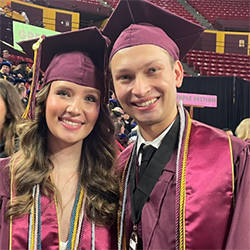
Born and raised in Scottsdale, Arizona, Kameron Cochrane graduated from Arizona State University in May 2025 with two degrees in medical microbiology and chemistry, a minor in mathematics and a certificate in cross-sector leadership.
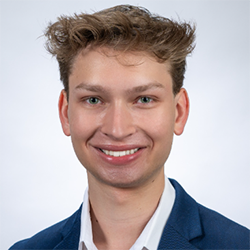
His general interest in medicine lies in pediatrics — more specifically in hematology/oncology, neonatology and infectious diseases. He hopes to strengthen these interests by studying, training and working in academic medicine and public health to improve care for varied at-risk pediatric populations.
Cochrane’s biggest supporters have always been his family and friends — particularly his mother, late father, twin sibling, older sister and grandmother, who have always supported him throughout his education and always-evolving goals.
Path toward Medicine
What was the spark that led you to become a physician?
My general interest in medicine began while exploring careers in research, education and health care. Fascinated by immunology and virology, I was trying to see how I could blend these fields with my scientific interests.
While shadowing physicians and working as a medical assistant in a pediatric primary care office, I began to see how the skills I gained when conducting oncolytic virology research and teaching students as a teaching assistant and tutor in college blended with the work of a physician.
I soon realized that physicians don’t just apply their medical training to improve patients’ lives. They also educate patients and families while advancing medical diagnostics and therapeutics. In medicine, I can have a direct impact on my own patients and a broader impact on my communities. This unique balance is what confirmed my goal of becoming a physician.
Did you do any volunteering in health fields prior to medical school?
I volunteered in various units across Banner – University Medical Center Phoenix for two years. I particularly loved volunteering in the NICU and behavioral health units, where I helped care for neonates and provided supportive and social care to patients.
I was also the lead volunteer in the emergency department and enjoyed training incoming volunteers on how to support patient care while following hospital protocol. Being involved in caring for these patient populations helped me envision the impact I can make as a member of a patient’s care team and made service a key focus of my work.
The College of Medicine – Phoenix
Why did you choose the College of Medicine – Phoenix?
While in high school and undergrad, I had the incredible opportunity to participate in the College of Medicine – Phoenix’s pipeline programs — like Saturday Scrubs and Pre-Med Academy. It was in these programs I first began to see how caring and supportive the faculty, staff, and students are at the college.
When choosing a medical school, I really focused on finding one that emphasized student well-being, serving local communities, collaboration and medical innovation. Talking to faculty and students about the curriculum, available resources and student life culture, it gave me confidence that I’d be attending a school that doesn’t just put student feedback first but also gives students the tools to collaborate with and serve countless communities across the city I call home.
Lastly, the College of Medicine – Phoenix’s varied opportunities, such as the dual MD/MPH program, community clinical experience and a myriad of community health (CHIP) programs ensured the school had ways for me to explore my interests in public health and service while gaining early clinical exposure. The college's culture and academic resources didn’t just stand out to me but were closely aligned with my personal ambitions as a medical trainee, making this decision an easy one!
What excites you most about beginning medical school?
I’m mostly excited to begin working alongside fellow students who aim to apply our medical education to finding new ways of improving the health of our communities. I’m also looking forward to engaging with patients and faculty whom I can learn from. By applying their experiences and advice to my education, I can continue to improve my practice as a training physician.
Significance of the White Coat
What does the white coat mean to you?
The white coat symbolizes my entry into a career committed to improving the lives of others through empathy, service and continuous innovation. It also symbolizes a dedication to lifelong learning and a reminder to always remember the "why” behind entering medicine, even when the journey can be difficult.
About the College
Founded in 2007, the University of Arizona College of Medicine – Phoenix inspires and trains exemplary physicians, scientists and leaders to advance its core missions in education, research, clinical care and service to communities across Arizona. The college’s strength lies in our collaborations and partnerships with clinical affiliates, community organizations and industry sponsors. With our primary affiliate, Banner Health, we are recognized as the premier academic medical center in Phoenix. As an anchor institution of the Phoenix Bioscience Core, the college is home to signature research programs in neurosciences, cardiopulmonary diseases, immunology, informatics and metabolism. These focus areas uniquely position us to drive biomedical research and bolster economic development in the region.
As an urban institution with strong roots in rural and tribal health, the college has graduated more than 1,000 physicians and matriculates 130 students each year. Greater than 60% of matriculating students are from Arizona and many continue training at our GME sponsored residency programs, ultimately pursuing local academic and community-based opportunities. While our traditional four-year program continues to thrive, we will launch our recently approved accelerated three-year medical student curriculum with exclusive focus on primary care. This program is designed to further enhance workforce retention needs across Arizona.
The college has embarked on our strategic plan for 2025 to 2030. Learn more.