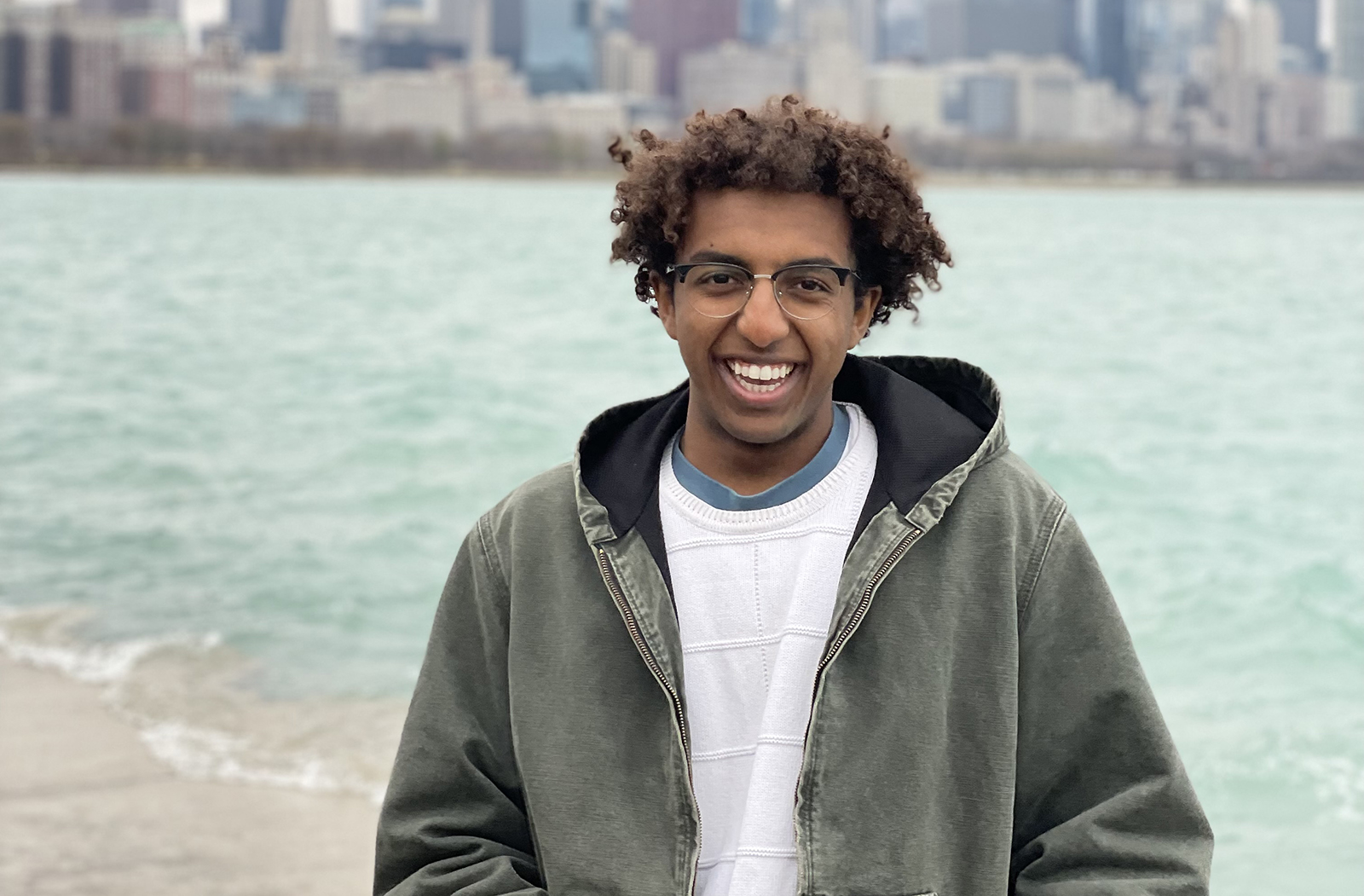
White Coat Profiles – Semeon Afework

The White Coat Ceremony marks the first time a medical student will don his or her white coat, the defining symbol of a physician. The coat bestows a great honor on each student, and with it comes a responsibility to uphold the trust of every patient they will encounter. The Class of 2030 will receive their white coats on July 17 during a ceremony that begins at 3:30 p.m. in North Ballroom of the Phoenix Convention Center.
Meet Semeon Afework
Semeon Afework was born in Addis Ababa, Ethiopia, but his childhood roots were planted in Phoenix, Arizona. For his undergraduate studies, he attended the University of Notre Dame.
Afework’s interest in medicine began when he was diagnosed with keratoconus as a teenager and underwent treatment. After experiencing firsthand how much a physician could impact someone’s life, his curiosity and interest in medicine continued to grow through clinical experiences, research and service opportunities throughout college and during his gap years.
His biggest supporters have been his family. Afework said that his parents have been unwavering supporters, consistently motivating him to work hard, pursue his goals with purpose and make the most of every opportunity that comes his way.
Additionally, watching his older brother pursue medicine helped Afework receive a clearer understanding of the profession and helped him see that this is a path he could follow, as well. Afework’s brother has been a constant source of guidance, encouragement and honest advice throughout his journey.
Path toward Medicine
What was the spark that led you to become a physician?
Although my own experience with keratoconus ultimately inspired my decision to pursue medicine, the seed was planted years earlier. On drives home from school, my mother, a nurse at a clinic serving individuals experiencing homelessness in Central Phoenix, would share stories from work with my brother and me. I was deeply moved by the relationships she built with her patients and the trust they placed in her. Seeing the impact of those connections made me hope to carry that same spirit of service and compassion into my own career.
Did you do any volunteering in health fields prior to medical school?
Prior to medical school, I was fortunate to volunteer in several health care settings that exposed me to different aspects of patient care. In South Bend, I volunteered in the emergency department at Beacon Memorial Hospital, where I supported patients and assisted staff with day-to-day operations. I also served as a hospice volunteer, visiting patients in their homes and providing companionship during difficult stages of life. More recently, I have volunteered at Circle the City in Phoenix, helping lead activities for individuals recovering from illness or injury. These experiences showed me that health care extends beyond diagnoses and treatments and reinforced the importance of human connection in caring for others.
The College of Medicine – Phoenix
Why did you choose the College of Medicine – Phoenix?
I chose the College of Medicine – Phoenix because of its strong commitment to serving Arizona communities and its emphasis on developing physicians through service, clinical excellence and lifelong learning. I am especially excited about the Community Clinical Experience because it provides the opportunity to engage with patients in our communities early in medical school.
Furthermore, having grown up in Phoenix, I have seen firsthand both the diversity of the Valley and the health care challenges many residents face. These experiences have strengthened my commitment to serving this community. I am excited to continue learning from the patients, physicians, and communities of Arizona throughout medical school.

What excites you most about beginning medical school?
Honestly, I am excited to be a student again. After spending the last two years working in clinical research, I have realized just how much there is still to learn about medicine and patient care. I look forward to building on those experiences in medical school, where I can deepen my understanding of medicine while learning alongside classmates, faculty and mentors who share a passion for caring for patients. I am also excited to meet people from different backgrounds and experiences while representing communities similar to my own and showing others that a career in medicine is possible for them as well.
Significance of the White Coat
What does the white coat mean to you?
The white coat reminds me of where I came from and the people who helped me get here. It represents the responsibility that comes with caring for others and the trust patients place in their physicians. Whenever I put it on, I hope it serves as a reminder to stay humble, work hard and never lose sight of why I chose this path.
About the College
Founded in 2007, the University of Arizona College of Medicine – Phoenix inspires and trains exemplary physicians, scientists and leaders to advance its core missions in education, research, clinical care and service to communities across Arizona. The college’s strength lies in our collaborations and partnerships with clinical affiliates, community organizations and industry sponsors. With our primary affiliate, Banner Health, we are recognized as the premier academic medical center in Phoenix. As an anchor institution of the Phoenix Bioscience Core, the college is home to signature research programs in neurosciences, cardiopulmonary diseases, immunology, informatics and metabolism. These focus areas uniquely position us to drive biomedical research and bolster economic development in the region.
As an urban institution with strong roots in rural and tribal health, the college has graduated more than 1,000 physicians and matriculates 130 students each year. Greater than 60% of matriculating students are from Arizona and many continue training at our GME sponsored residency programs, ultimately pursuing local academic and community-based opportunities. While our traditional four-year program continues to thrive, we will launch our recently approved accelerated three-year medical student curriculum with exclusive focus on primary care. This program is designed to further enhance workforce retention needs across Arizona.
The college has embarked on our strategic plan for 2025 to 2030. Learn more.