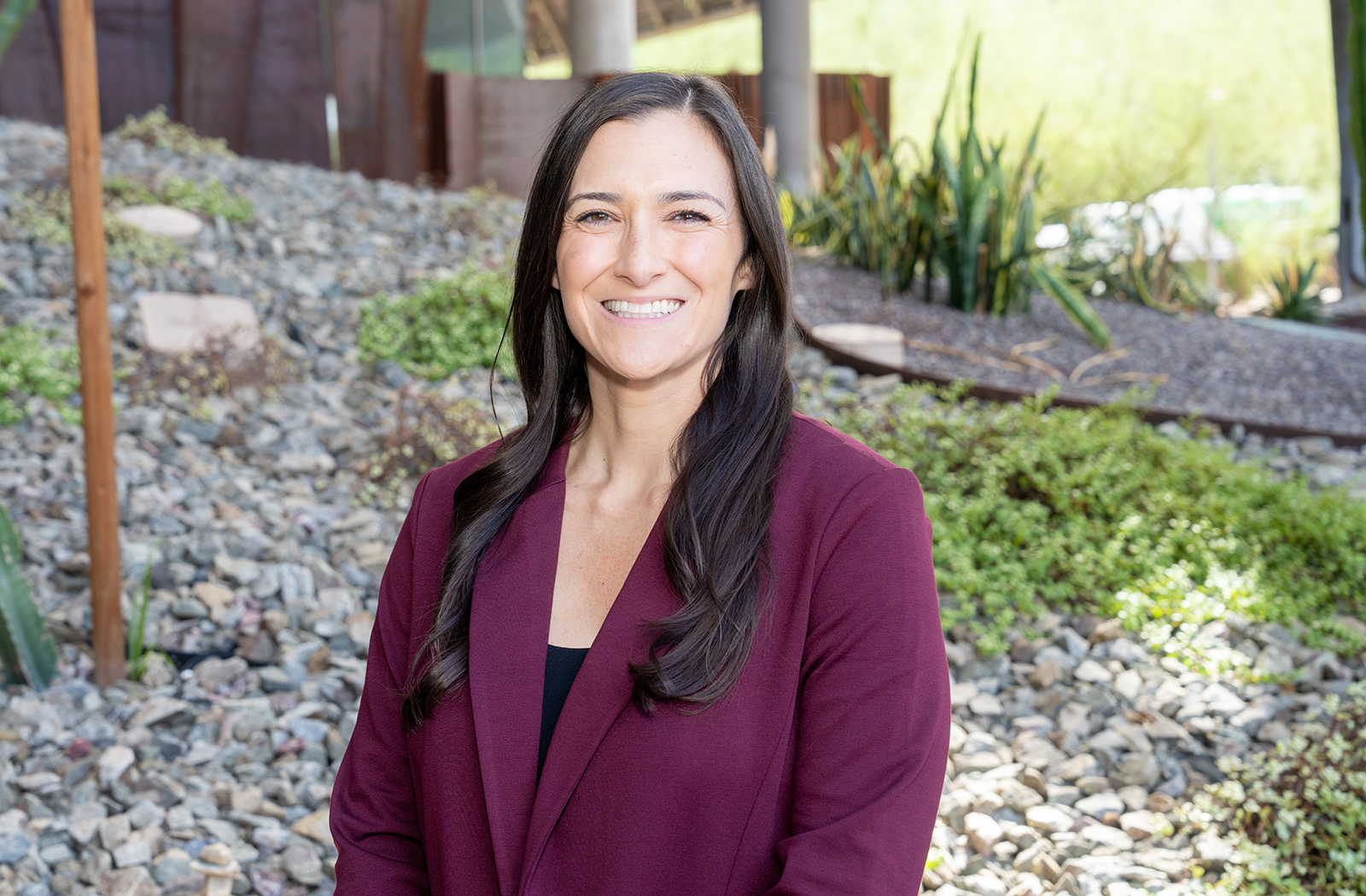
Women in Medicine and Science – Jennifer Nelson, DO

Jennifer Nelson, DO, program director of the Internal Medicine Residency and an associate clinical professor of Internal Medicine at the University of Arizona College of Medicine – Phoenix, is interested in trainee and faculty development.
For Dr. Nelson, one of the most pressing questions facing Graduate Medical Education (GME) today is how the integration of artificial intelligence (AI) will change the landscape of medicine and how physicians prepare trainees for that change.
“We are already beginning to see AI incorporated into clinical practice through ambient listening tools, clinical scribes, diagnostic support and other technologies,” Dr. Nelson said. “The question for GME is how we integrate these tools into training in a way that helps our residents become better physicians without allowing technology to replace the foundational skills they need to develop.”
In her view, residents should have a baseline level of clinical knowledge and reasoning before AI tools can truly augment their practice. At the same time, physicians early in their career are being prepared for a career in which AI may likely become a routine part of their practice.
“Our responsibility is not just to teach residents how to use a new technology, but to help them become physicians who understand when it is helpful, when it is not, and how to use it thoughtfully and safely throughout their careers,” Dr. Nelson said.
Dr. Nelson believes there will be a greater integration of technology and AI into both clinical care and medical education in the future. The field could move toward individualized learning with curricula that responds to the needs of individual learners, rather than a one-size-fits-all approach.
For example, electronic health records could incorporate tools that identify learning opportunities and provide education around a particular diagnosis. According to Dr. Nelson, these tools would make work more efficient and learning more accessible and personalized.
“I hope the next 10 years bring us closer to a model of GME that is more individualized, adaptive and integrated into the clinical environment — using technology to enhance education while keeping the development of excellent physicians at the center of what we do,” Dr. Nelson said.
When she embarked on her path to a career in medicine, there was no roadmap for her. No one she knew had gone to medical school before her and no one could tell her what a career in medicine, specifically in Med-Peds, could look like.
Through finding mentors and asking questions, Dr. Nelson began to understand the type of career she wanted to build. Her hope now is to encourage trainees to spend time understanding their own values and being intentional about seizing opportunities that move them in the right direction.
“Medicine can be a challenging career, and the demands of physicians continue to increase,” Dr. Nelson said. “One of the most important things I can do is lead by example and continue to do work that I find meaningful and connected to my values while helping trainees discover what those things are for them.”
This is especially true as a female physician in a traditionally male dominated field. Being a woman in medicine is a unique experience that continues to evolve through different stages of life. She has found tremendous support from the women around her as she has navigated through various eras in her career.
“I genuinely don’t think I would be where I am today in my career or in the many other roles I have in my life without the women who have supported me along the way,” Dr. Nelson said.
In the future, Dr. Nelson hopes to continue building connections and encouraging women to get involved in Women in Medicine groups so that women may have a community to support, sponsor and learn from one another.
“There are so many incredibly talented women doing amazing work, and I think we are stronger when we make sure those women have the support they need to be successful in all of the roles they choose to take on,” Dr. Nelson said.
Dr. Nelson encourages high school and pre-medical students to seek out mentors early and connect with people whose work inspires them. She believes the best mentors do more than tell you what path to take; they help you understand your own values, ask the right questions and develop the confidence to make thoughtful decisions about your career.
“Remember that your skills, knowledge and potential are never finite. There is always an opportunity to grow further into your strengths, learn from your challenges and become a better version of yourself,” Dr. Nelson said. “Stay curious, be open to opportunities and give yourself permission to build a career that is uniquely yours.”
About the College
Founded in 2007, the University of Arizona College of Medicine – Phoenix inspires and trains exemplary physicians, scientists and leaders to advance its core missions in education, research, clinical care and service to communities across Arizona. The college’s strength lies in our collaborations and partnerships with clinical affiliates, community organizations and industry sponsors. With our primary affiliate, Banner Health, we are recognized as the premier academic medical center in Phoenix. As an anchor institution of the Phoenix Bioscience Core, the college is home to signature research programs in neurosciences, cardiopulmonary diseases, immunology, informatics and metabolism. These focus areas uniquely position us to drive biomedical research and bolster economic development in the region.
As an urban institution with strong roots in rural and tribal health, the college has graduated more than 1,000 physicians and matriculates 130 students each year. Greater than 60% of matriculating students are from Arizona and many continue training at our GME sponsored residency programs, ultimately pursuing local academic and community-based opportunities. While our traditional four-year program continues to thrive, we will launch our recently approved accelerated three-year medical student curriculum with exclusive focus on primary care. This program is designed to further enhance workforce retention needs across Arizona.
The college has embarked on our strategic plan for 2025 to 2030. Learn more.